
Dogwood Canyon Blog
Bat Signals: Why Bat Conservation Matters
October 16, 2025
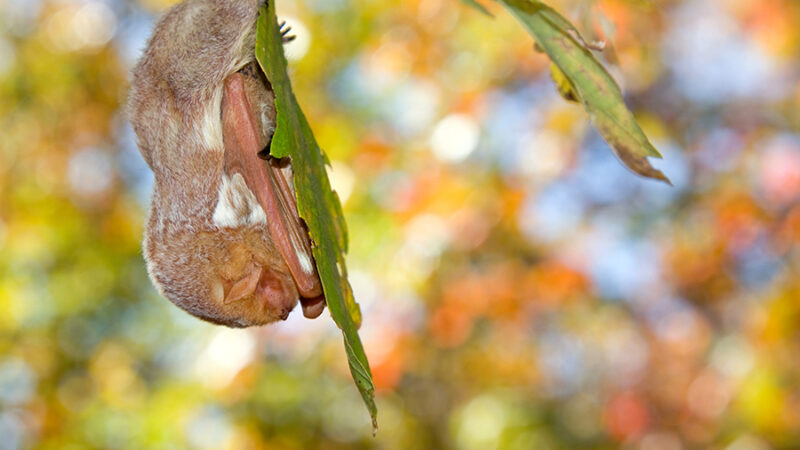
As the sun sets and the moon begins to shine over Dogwood Canyon, the skies begin to stir with the silent flutter of bats. These small, winged mammals are often overlooked, but they play a vital role in the health of the canyon.
Missouri is home to 14 confirmed bat species. At Dogwood Canyon, visitors are most likely to encounter species such as the big brown bat, eastern red bat, and evening bat — three of the most commonly seen bats in Missouri.
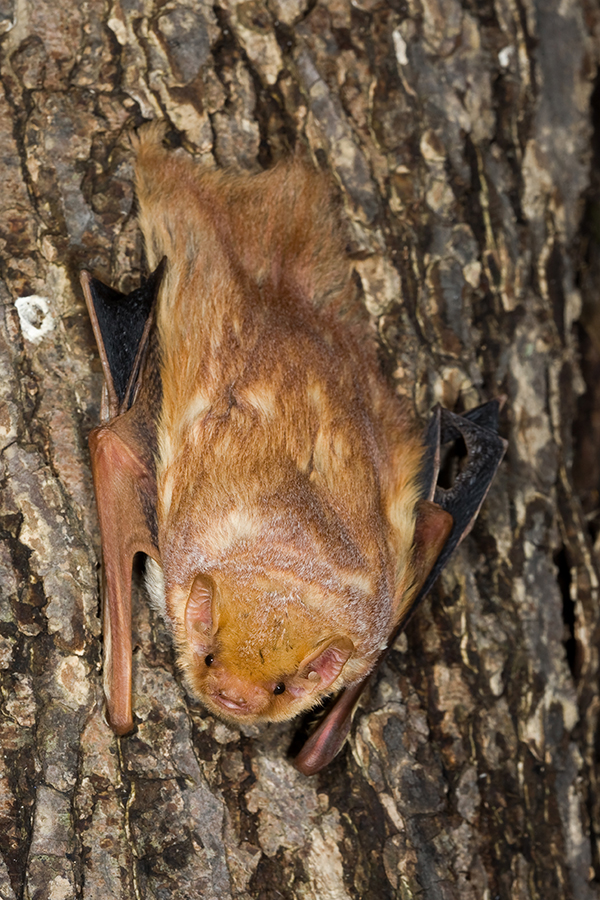
Bats are insectivores, feeding on mosquitoes, moths, beetles, and other flying insects. Their ability to hunt in the dark is aided by echolocation, a biological sonar system that allows them to detect and track prey with remarkable precision. Their anatomy is uniquely suited for flight: wings made of thin skin stretched over elongated fingers, large ears with a structure called the tragus to enhance hearing, and a tail membrane supported by a spur called the calcar. These adaptations make bats agile hunters and graceful flyers.
They roost in a variety of places — caves, hollow trees, behind loose bark, in barns, attics, and bridges. Some species of bats hibernate in caves during the winter and spend the warmer months in trees or manmade structures. Others migrate south in the fall and return in the spring, sometimes traveling hundreds of miles. Bats are nocturnal and begin feeding shortly after sunset. A mother may consume her body weight in insects each night to support her young.
The bat life cycle is closely tied to the seasons. Many species hibernate in winter, with females forming nursery colonies in spring to raise their pups. Most bats give birth to one pup, though some may have more. Mothers are attentive, nursing their newborns until they’re ready to fly, usually by midsummer.
Despite their ecological importance, bats face serious threats. Habitat loss, pesticide use, and cave disturbances have long impacted populations. More recently, wind turbines and white-nose syndrome have caused significant declines. This syndrome is a fungal disease that disrupts hibernation, leading to starvation. First confirmed in Missouri in 2012, it has affected seven of the state’s bat species, including the endangered Indiana and gray bats.
Bats are essential to cave ecosystems. By feeding outside and excreting inside caves, they bring nutrients that support entire food webs. Their waist nourishes fungi and insects, which in turn feed other cave-dwelling organisms. Bats also help control insect populations and serve as prey for owls, snakes, and other predators.
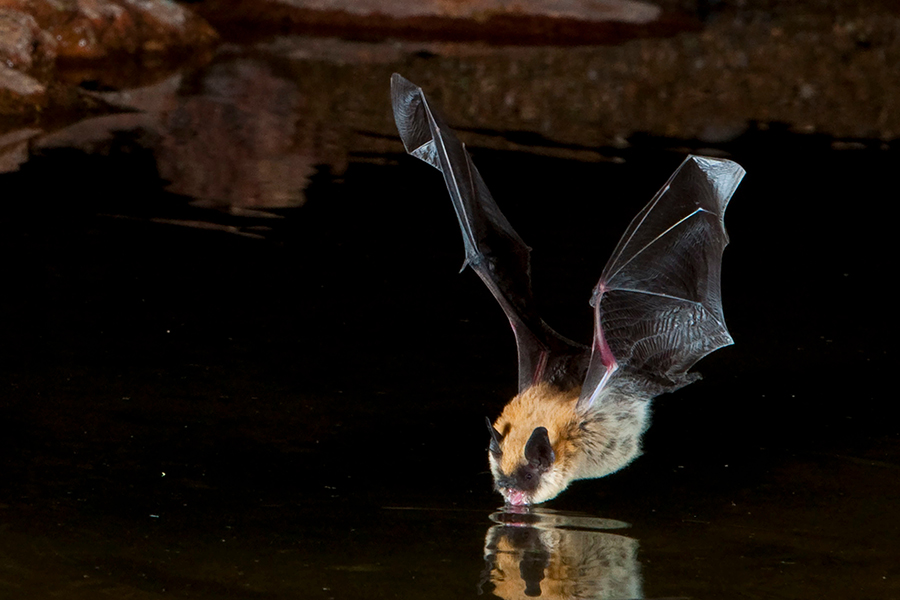
Dogwood Canyon is a place where these remarkable animals can thrive, and where visitors can learn to appreciate their role in nature. Watching bats emerge at dusk is a reminder of the hidden wonders of the night and the importance of protecting them.
Make sure to check out our Owl Prowl experience, where you’ll get an up-close encounter with a live owl and a chance to see some of the bats that call Dogwood Canyon home!